
Wrist Pain Treatment in Edinburgh for Pain, Stiffness & Reduced Movement
Wrist pain can make everyday tasks surprisingly difficult. Typing, gripping, lifting, driving, exercising or simply opening a jar can become uncomfortable when the wrist is painful, stiff or weak.
At The Wellness Barn Edinburgh, we provide personalised support for people seeking wrist pain treatment in Edinburgh, whether symptoms have developed gradually, followed an injury or are affecting your ability to work, leisure, exercise and carry out everyday activities.
Why Choose The Wellness Barn Edinburgh For Wrist Pain?
- Personalised assessment based on your symptoms, activities and goals
- Full structural, whole-person and lifestyle analysis
- Over 30 years of practitioner experience
- Consideration of the wrist, hand, forearm, elbow and wider movement patterns
- Support for injury, overuse and movement-related wrist problems
- Access to Physiotherapy, Sports Therapy, Acupuncture and complementary services
- Rehabilitation tailored to work, sport and everyday activities
- Practical advice for managing symptoms between appointments
- Calm setting at Swanston Farm near the Pentland Hills
- Free on-site parking and convenient access from across Edinburgh
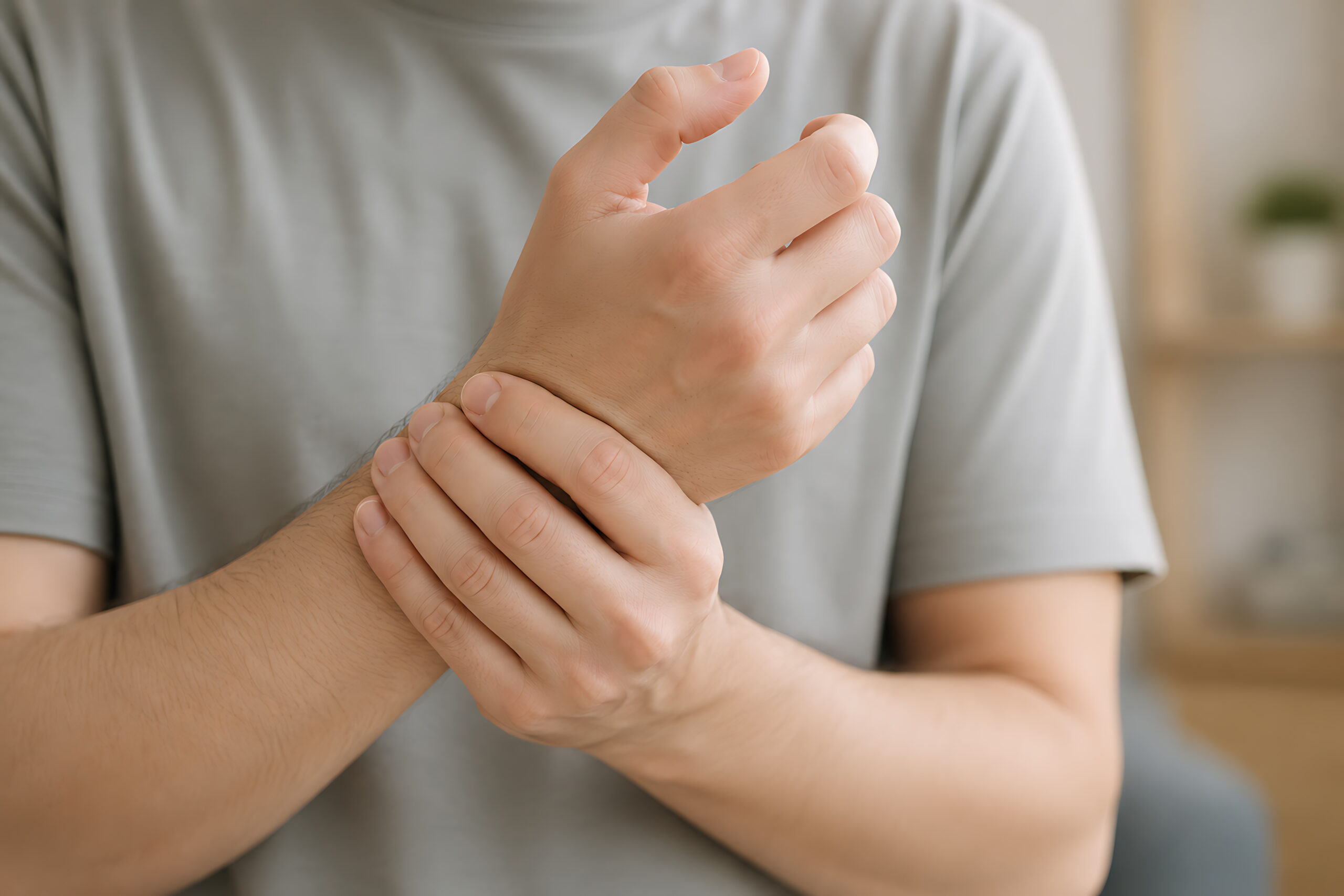
Understanding Wrist Pain
The wrist is a complex area made up of numerous small bones, joints, ligaments, tendons, muscles and nerves working together to provide movement, stability and fine control.
Because we use our hands and wrists throughout the day, symptoms can be stubborn and affect everything from computer work and household tasks to gym training, racquet sports, cycling and manual work.
Wrist pain may be felt on the thumb side, little-finger side, back or palm side of the wrist. Some people experience a general ache, while others notice sharp pain during specific movements, stiffness, weakness, swelling or difficulty gripping.
Pain around the wrist can also sometimes be associated with structures elsewhere in the arm. A personalised assessment can therefore consider the hand, wrist, forearm and elbow rather than focusing solely on the point where pain is felt.
For related conditions, see:
Common Symptoms of Wrist Pain
Symptoms can vary depending on the structures involved and may include:
- Aching around the wrist
- Sharp pain during particular movements
- Pain when gripping or carrying objects
- Wrist stiffness
- Reduced range of movement
- Swelling around the wrist
- Tenderness when touching certain areas
- Weakness when gripping
- Difficulty pushing through the hand
- Pain when twisting the wrist or forearm
- Discomfort during typing or mouse use
- Pain during gym exercises or sport
- Symptoms extending into the hand, thumb or forearm
- Pins and needles or altered sensation in some cases
The pattern, location and behaviour of your symptoms can provide useful information during assessment.
Possible Causes or Triggers of Wrist Pain
Wrist pain can have many possible causes, including:
- Sprains and ligament injuries
- Falls onto an outstretched hand
- Tendon irritation or tendinopathy
- Repetitive hand and wrist movements
- Sudden increases in physical activity
- Sports-related injuries
- Weight training or repetitive loading
- Manual work and power tools
- Prolonged computer or desk-based tasks
- Arthritis
- Previous wrist injuries
- Repeated gripping or twisting
- Nerve irritation or compression
- Poor tolerance to a particular workload or activity
- Fractures following trauma
Some symptoms may develop suddenly following an injury, while others gradually appear after repeated loading or changes in work, sport or exercise.
Not all wrist pain has the same cause, so appropriate assessment is important before deciding on treatment or rehabilitation.

When to See a Healthcare Professional
Consider seeking professional assessment if:
- Wrist pain persists or repeatedly returns
- Symptoms interfere with work or everyday activities
- You have reduced wrist movement
- Grip strength has noticeably decreased
- Pain is preventing you from exercising or playing sport
- Swelling does not settle
- You experience recurring pins and needles or altered sensation
- Symptoms are becoming progressively worse
- Pain developed after an injury and is not improving
Seek prompt medical assessment following significant trauma or if you experience:
- Severe wrist pain after a fall or accident
- Obvious changes in shape
- Significant or rapidly increasing swelling
- Inability to move the wrist or use the hand normally
- Loss of sensation
- A hand that becomes unusually cold, pale or discoloured
- Severe redness, heat or swelling alongside fever or feeling unwell
- A suspected fracture
Some wrist injuries require imaging, immobilisation or specialist assessment before rehabilitation begins.
How We Help With Wrist Pain
At The Wellness Barn Edinburgh, our approach starts by understanding how your wrist pain affects you.
Your assessment may consider:
- Where your pain is located
- How and when symptoms began
- Wrist and forearm movement
- Strength and grip
- Work demands
- Exercise and sporting activities
- Previous injuries
- Repetitive movements
- Your rehabilitation goals
Depending on your assessment, support may aim to:
- Improve wrist mobility
- Restore strength
- Improve grip capacity
- Build tolerance to everyday loading
- Address muscular tension
- Improve control of the wrist and forearm
- Support recovery following injury
- Modify aggravating activities temporarily
- Gradually rebuild tolerance to work or sport
- Reduce the likelihood of repeated overload
- Improve confidence using the wrist again
Where relevant, your practitioner may also consider the hand, elbow, shoulder, neck and spine as nerves go down to the mid back/thoracic spine, to build a broader picture of your symptoms.
We do not claim to cure every cause of wrist pain. Where symptoms require medical investigation or specialist care, an appropriate referral may be recommended.
Methods or Services We Use to Support Wrist Pain in Edinburgh
Musculoskeletal Physiotherapy
Musculoskeletal Physiotherapy can assess wrist movement, strength and function while considering related structures in the hand, forearm and upper limb.
Depending on your individual presentation, your rehabilitation may include education, hands-on treatment, mobility work, strengthening exercises and progressive loading.
The aim is to help you restore function and gradually return to the activities that matter to you.
Musculoskeletal PhysiotherapySports Therapy
Sports Therapy may be suitable for wrist problems associated with exercise, gym training, racquet sports, cycling or other physical activities.
Your practitioner can consider the demands placed on the wrist and help develop an appropriate rehabilitation programme for your activity.
Sports TherapyAcupuncture
Acupuncture may be considered alongside other approaches for some people experiencing musculoskeletal discomfort.
Whether acupuncture is suitable will depend on your symptoms, medical history and individual assessment.
AcupunctureMassage
Massage may be used where appropriate to address muscular tension in the forearm and surrounding tissues as part of a wider rehabilitation plan.
Massage TherapiesMovement & Strength Rehabilitation
Progressive exercise can play an important role in restoring wrist and forearm capacity following many musculoskeletal problems.
Depending on your condition and stage of recovery, exercises may focus on:
- Wrist mobility
- Forearm strength
- Grip strength
- Tendon loading
- Wrist stability
- Functional movement
- Tolerance to weight-bearing through the hand
- Gradual return to work or sport
Your rehabilitation should be appropriate to your symptoms rather than based on a one-size-fits-all programme.
Wrist Pain From Repetitive Work & Computer Use
Wrist discomfort is sometimes associated with prolonged or repetitive activities such as typing, using a mouse, handling tools or performing repeated manual tasks.
The activity itself is not necessarily harmful. Problems can arise when the demands placed on the wrist exceed what the tissues currently tolerate, particularly when workload changes suddenly or there is insufficient opportunity for recovery.
Where relevant, your assessment may consider:
- Repetitive movements
- Length of time spent at a computer
- Mouse and keyboard use
- Manual work demands
- Breaks and variation throughout the working day
- Wrist and forearm strength
- Overall upper-limb movement
Rather than simply telling you to avoid using your wrist, rehabilitation can focus on helping you manage current symptoms while progressively rebuilding capacity for the activities your work requires.
For workplace-related physiotherapy support, explore:
Who This May Be Suitable For
Our wrist pain services in Edinburgh may be suitable for:
- Adults experiencing persistent or recurring wrist pain
- People recovering from a wrist sprain
- Individuals experiencing wrist stiffness
- People with reduced grip strength
- Office workers experiencing wrist discomfort
- Manual workers with activity-related symptoms
- Gym users experiencing pain when lifting weights
- People experiencing wrist pain during sport
- Individuals with tendon-related wrist problems
- People experiencing symptoms following repetitive activity
- Adults with arthritis affecting the wrist alongside appropriate medical care
- People returning to activity following an appropriately managed wrist injury
An initial assessment can help determine which service is most appropriate.
Who This May Not Be Suitable For & Key Considerations
Our services may not be suitable as the first step in every case.
Important considerations include:
- Suspected fractures require appropriate medical assessment
- Significant trauma may require imaging before rehabilitation
- Severe swelling or deformity should be medically assessed
- Open wounds require appropriate medical care
- Sudden loss of hand or wrist function requires prompt assessment
- Persistent numbness or neurological symptoms may require further investigation
- Severe redness, heat and swelling with fever should receive urgent medical attention
- Some ligament injuries may require specialist assessment
- Some forms of arthritis or inflammatory joint disease require medical management
- Treatment suitability depends on your individual health and medical history
If we believe your symptoms require investigation outside our scope, we may recommend contacting your GP or another appropriate healthcare service.
Why Choose The Wellness Barn Edinburgh?
The Wellness Barn brings physical health, rehabilitation and complementary wellbeing services together within a peaceful setting at Swanston Farm in South Edinburgh.
Rather than focusing solely on where it hurts, our whole-person approach considers your symptoms alongside movement, lifestyle, work, exercise and individual goals.
People choose The Wellness Barn Edinburgh for:
- Full structural, whole-person and lifestyle analysis
- Over 30 years of practitioner experience
- Personalised assessment and rehabilitation
- Access to multiple physical and complementary therapies
- Friendly, individualised care
- Practical education and self-management strategies
- Rehabilitation tailored to everyday activities
- Support for returning to work, exercise and sport
- Calm countryside environment
- Free on-site parking
Areas We Cover
We welcome clients from across Edinburgh and surrounding areas, including:
FAQs About Wrist Pain Treatment
Can physiotherapy help with wrist pain?
Physiotherapy can help assess musculoskeletal wrist pain and identify factors that may be contributing to your symptoms. Depending on the problem, rehabilitation may involve mobility work, strengthening, progressive loading, education and advice for returning to normal activities.
What are common causes of wrist pain?
Wrist pain can be associated with sprains, tendon problems, repetitive activity, arthritis, sports injuries, falls and other forms of trauma. Because the wrist contains several bones, joints, ligaments, tendons and nerves, assessment can help identify the most appropriate next step.
Can repetitive computer work cause wrist pain?
Wrist symptoms can sometimes develop during periods of prolonged or repetitive computer or power tool use. Your overall workload, positioning, movement variation, strength and tolerance to repetitive activity may all be relevant.
Why does my wrist hurt when I grip something?
Pain when gripping can be associated with several structures around the wrist and forearm, including muscles and tendons. If symptoms persist or grip strength is declining, assessment is recommended.
Why does my wrist hurt when I put weight through my hand?
Weight-bearing places different demands on the wrist compared with everyday gripping. Pain during exercises such as press-ups, yoga poses or gym movements may be related to joint mobility, previous injury, current tissuelength or another underlying wrist problem.
Can wrist pain be related to my hand or forearm?
Yes. The muscles and tendons controlling many wrist and hand movements extend through the forearm, so symptoms in these areas can sometimes overlap.
See our Hand Pain Treatment page for further information.
Should I exercise a painful wrist?
It depends on the cause and severity of your symptoms. Some conditions benefit from appropriately modified movement and progressive exercise, while acute injuries may initially require protection or medical assessment. A physiotherapist can advise you following assessment.
How long does wrist pain take to improve?
Recovery time varies according to the cause, severity, duration of symptoms, your general health and the demands you place on the wrist. A personalised assessment can provide more useful guidance than a general recovery timeframe.
Do I need an X-ray or scan for wrist pain?
Not everyone with wrist pain requires imaging. However, X-rays or other investigations may be appropriate following significant trauma, suspected fracture or where symptoms indicate further investigation is necessary.
Do I need a referral to visit The Wellness Barn?
No. You can contact The Wellness Barn Edinburgh directly to discuss your symptoms and find an appropriate service.
For further information, visit our:

Seek Treatment For Writs Pain or Discomfort in Edinburgh Today
Wrist pain can interfere with work, hobbies, exercise and many of the everyday activities we take for granted.
At The Wellness Barn Edinburgh, we combine personalised assessment with rehabilitation and complementary wellbeing options to help you improve movement, rebuild strength and return to the activities that matter to you.
If you are looking for wrist pain treatment or wrist physiotherapy in Edinburgh, contact our team to discuss the most suitable next step.
Disclaimer: This page provides general information only and does not constitute medical advice, diagnosis or treatment. Wrist pain has many possible causes, and some injuries require medical investigation or specialist treatment. Seek advice from your GP, physiotherapist or another appropriately qualified healthcare professional if symptoms are severe, persistent, unexplained or follow significant trauma.