
TMJ Treatment in Edinburgh for Jaw Pain, Stiffness & Movement Problems
Temporomandibular joint (TMJ) problems, often referred to as temporomandibular disorders (TMD), can cause pain and stiffness around the jaw and the muscles responsible for jaw movement. Symptoms can also extend beyond the jaw, contributing to facial discomfort, headaches, neck tension and difficulty eating or opening your mouth comfortably or a locked or stuck jaw. We provide personalised support for people seeking TMJ treatment in Edinburgh, with a whole-person approach that considers your jaw, neck, posture, movement patterns, lifestyle and other factors that may be contributing to your symptoms.
Why Choose The Wellness Barn Edinburgh for TMJ Treatment?
- Personalised assessment tailored to your jaw symptoms, health history and goals
- Full structural, whole-person and lifestyle analysis
- Experienced physiotherapy and wellbeing practitioners
- Access to physiotherapy, acupuncture, Visceral Manipulation and complementary services in one location
- Assessment of possible connections between jaw, neck and wider movement patterns
- Support for jaw stiffness, muscular tension and associated neck discomfort
- Practical advice to help manage aggravating habits and everyday activities
- Calm countryside setting at Swanston Farm near the Pentland Hills
- Focus on education, self-management and long-term function
- Free on-site parking with convenient access from across Edinburgh

Understanding TMJ & Temporomandibular Disorders (TMD)
The temporomandibular joints connect your lower jaw to your skull and are located just in front of each ear. Together with the surrounding muscles, ligaments and other structures, they allow the jaw to open, close and move from side to side when you speak, eat, yawn and make facial expressions.
Temporomandibular disorder (TMD) is the term generally used for problems affecting these joints and the muscles controlling jaw movement.
TMD can present differently from one person to another. Some people experience localised jaw pain, while others notice stiffness, headaches, facial discomfort or symptoms extending towards the neck and shoulders.
Clicking or popping of the jaw by itself is common and does not necessarily indicate that treatment is required, particularly when it is not accompanied by pain or restricted movement.
For related conditions, see:
Common Symptoms of TMJ/TMD
Symptoms may include:
- Aching or pain around the jaw
- Pain around the face or near the ear
- Jaw stiffness
- Difficulty or discomfort when opening the mouth
- Limited jaw movement
- Clicking, popping or grinding sounds
- Jaw locking or temporarily becoming difficult to move
- Discomfort when chewing
- Facial muscle tension
- Neck or shoulder discomfort
- Recurring headaches
- Earache-like symptoms
- Ringing in the ears (tinnitus)
Symptoms can fluctuate and may become more noticeable during periods of stress, prolonged jaw tension or activities that place additional demand on the jaw.
Possible Causes Or Triggers
There is not always one clear cause of TMD. Symptoms may be associated with several contributing factors, including:
- Teeth clenching or grinding
- Stress-related jaw tension
- Trauma or injury to the jaw
- Arthritis affecting the temporomandibular joint
- Repeatedly chewing gum
- Nail biting
- Regularly biting or chewing objects
- Prolonged or repetitive jaw loading
- Muscle tension around the jaw, face, neck or pelvis
- Postural and movement factors
Because several factors may contribute at the same time, understanding your individual symptoms and history can be an important part of determining an appropriate management approach.
When To See A Healthcare Professional
You may wish to seek professional assessment if you experience:
- Persistent or recurring jaw pain
- Pain when eating or chewing
- Difficulty opening your mouth normally
- Jaw stiffness that affects everyday activities
- Painful clicking, popping or grinding
- Recurrent jaw locking
- Facial pain or persistent muscular tension
- Headaches occurring alongside jaw symptoms
- Jaw symptoms accompanied by neck discomfort
- Symptoms that are becoming progressively worse
Seek prompt medical or dental advice if you develop significant facial or jaw swelling, symptoms following substantial trauma, severe unexplained pain, numbness or tingling, or difficulty eating or drinking.
The NHS guidance on temporomandibular disorder (TMD) also provides useful information about symptoms and when to seek help.
How We Help With TMJ & Jaw Pain in Edinburgh
At The Wellness Barn Edinburgh, we do not claim to cure temporomandibular disorders. Instead, our aim is to help you understand the factors that may be contributing to your symptoms and provide appropriate, personalised support.
Rather than looking at the jaw in isolation, assessment may consider how different areas of your body interact.
Depending on your individual circumstances, we may help you:
- Improve comfortable jaw movement
- Reduce muscular tension around the jaw, face and neck
- Address movement or postural factors that may be contributing to symptoms
- Improve neck mobility where appropriate
- Identify everyday habits that may aggravate your jaw
- Improve awareness of clenching and jaw tension
- Develop appropriate exercises and self-management strategies
- Build confidence with normal jaw movement
- Support associated neck discomfort or headaches
- Understand when further dental or medical assessment may be appropriate
Your treatment plan will depend on your assessment, symptoms, medical history and individual goals.
Methods or Services We May Use to Support TMJ Problems in Edinburgh
Musculoskeletal Physiotherapy
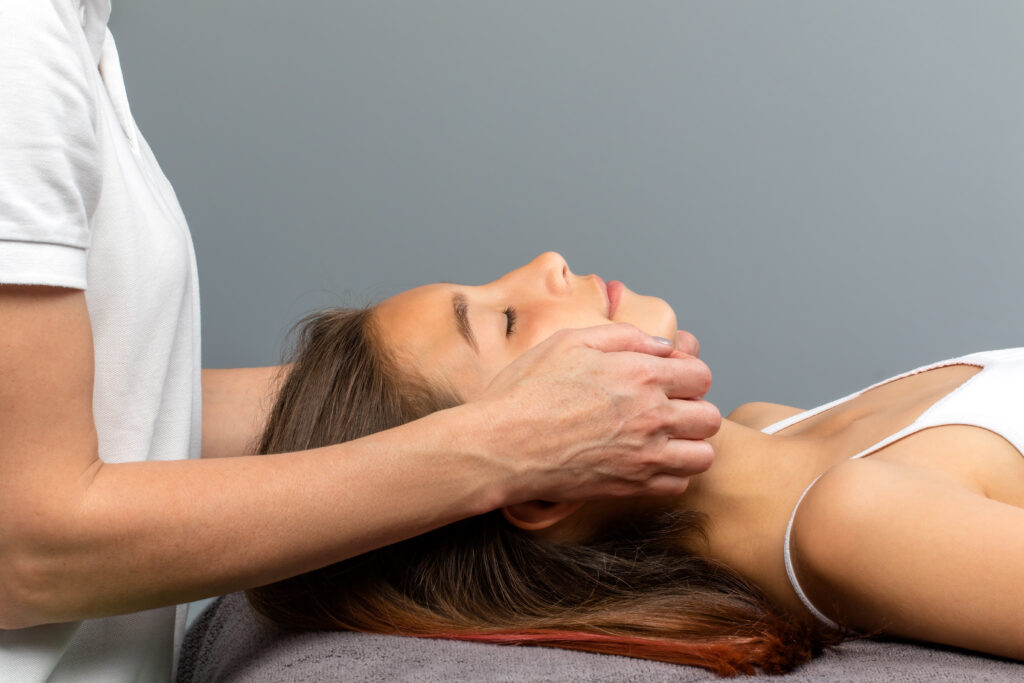
Musculoskeletal Physiotherapy can assess musculoskeletal factors associated with jaw symptoms, including movement, muscle tension and the relationship between the jaw, neck and surrounding structures.
Following assessment, support may include appropriate hands-on techniques, movement exercises, education and practical self-management advice.
Visceral Manipulation
Visceral Manipulation is a gentle hands-on approach that considers restrictions and movement within connective tissues throughout the body.
At The Wellness Barn, this may form part of a wider whole-person approach where appropriate, considering how tissue mobility and restrictions elsewhere may relate to the neck, head and jaw.
Acupuncture
Acupuncture may be considered as part of a broader treatment approach for some people experiencing muscular tension or discomfort.
Whether acupuncture is appropriate will depend on your individual symptoms and assessment.
Massage
Muscular tension can sometimes extend beyond the jaw into the neck and shoulders. Where appropriate, massage may form part of a wider wellbeing approach aimed at reducing muscular tension and encouraging relaxation.
Movement & Rehabilitation
Where neck mobility, strength, posture or wider movement patterns are relevant, guided rehabilitation may form part of your longer-term plan.
The Wellness Barn provides access to several movement and physical wellbeing services, including:
Your practitioner can advise whether any of these services are appropriate for you.
Who This May Be Suitable For
Our TMJ and jaw pain support in Edinburgh may be suitable for adults experiencing:
- Persistent jaw discomfort
- Jaw stiffness or reduced movement
- Pain while chewing
- Painful clicking or popping
- Muscular tension around the jaw or face
- Jaw clenching associated with muscle tension
- Neck discomfort alongside jaw symptoms
- Headaches associated with jaw or neck tension
- Recurring TMD symptoms
- Jaw symptoms affecting work, sleep or everyday life
We recommend an initial assessment to understand your symptoms and determine whether physiotherapy or another service is an appropriate starting point.
Who This May Not Be Suitable For & Key Considerations
Not every jaw problem should initially be managed through physiotherapy or complementary therapies.
Important considerations include:
- Dental problems such as toothache, infection or abscess require appropriate dental assessment
- Significant swelling, numbness or tingling around the face or jaw should be medically or dentally assessed
- Symptoms following substantial facial or jaw trauma may require medical investigation
- Persistent locking or significant restriction should be professionally assessed
- Some joint conditions may require dental, maxillofacial or specialist medical input
- Certain treatments may not be appropriate depending on your medical history
- Individual responses to treatment vary
- Our services are not a replacement for appropriate dental or medical diagnosis
Where your symptoms fall outside our scope, we may recommend assessment by your dentist, GP or another appropriate healthcare professional.
Why Choose The Wellness Barn Edinburgh?
The Wellness Barn brings physiotherapy, rehabilitation, movement and complementary wellbeing services together within one peaceful location at Swanston Farm near the Pentland Hills.
Our approach considers more than the area that hurts. We aim to understand your symptoms within the context of your movement, lifestyle, health history and individual goals.
People choose us because we offer:
- Full structural, whole-person and lifestyle analysis
- Over 30 years of practitioner experience
- Personalised assessment and treatment planning
- Access to physiotherapy and complementary therapies
- Collaborative multidisciplinary support
- A calm, friendly environment
- Free on-site parking
- Practical education and self-management advice
- A focus on helping you move, feel and function better
Areas We Cover
We welcome clients from across Edinburgh and surrounding areas, including:
FAQs About About TMJ/TMD Treatment
Can physiotherapy help with TMJ problems?
Physiotherapy may help some people experiencing TMD by assessing jaw and neck movement, muscular tension and other relevant musculoskeletal factors. Treatment is personalised according to your assessment and symptoms.
What is the difference between TMJ and TMD?
TMJ stands for the temporomandibular joint itself – the joint connecting your lower jaw to your skull. TMD stands for temporomandibular disorder and describes problems affecting the jaw joint and/or the muscles involved in jaw movement.
Is clicking in my jaw something to worry about?
Not necessarily. Jaw clicking or popping without pain is common and does not always require treatment. If the clicking is painful, your jaw locks, movement becomes restricted or you have other persistent symptoms, consider seeking professional assessment.
Can TMJ problems cause headaches?
Jaw muscle tension and temporomandibular disorders can occur alongside headaches and facial or neck discomfort. Because headaches have many possible causes, persistent, unusual or worsening headaches should be appropriately assessed.
Can TMJ problems cause neck pain?
Jaw and neck symptoms can sometimes occur together because the muscles and movement of these areas interact. An assessment can help determine whether neck movement or muscular tension may be relevant to your symptoms.
Can teeth grinding cause TMD?
Clenching or grinding your teeth may overload the jaw muscles and can contribute to TMD symptoms in some people. If you grind your teeth, particularly at night, discussing this with your dentist may also be appropriate.
Should I see a physiotherapist or dentist for TMJ pain?
This depends on your symptoms. Musculoskeletal symptoms involving jaw movement, muscle tension and associated neck problems may be appropriate for physiotherapy assessment. Tooth pain, suspected dental problems, bite concerns or other dental symptoms should be discussed with a dentist. In some cases, collaborative care may be appropriate.
What can I do at home for a painful jaw?
Temporarily eating softer foods, avoiding chewing gum, reducing clenching and using a wrapped warm or cool pack may help. Persistent or recurring symptoms should be professionally assessed.
Do I need a GP referral?
No. You can contact The Wellness Barn Edinburgh directly to discuss your symptoms and whether physiotherapy or another service may be appropriate.
For further information, visit our:

Seek Support for TMJ & Jaw Pain in Edinburgh Today
Persistent jaw pain can affect eating, speaking, sleeping and everyday comfort. Because temporomandibular disorders can involve more than the jaw joint alone, understanding the individual factors contributing to your symptoms can be an important first step.
If you are looking for TMJ treatment in Edinburgh, contact our team to discuss your symptoms and find an appropriate starting point.
Disclaimer: This page is provided for general information only and does not constitute medical or dental advice, diagnosis or treatment. TMJ/TMD symptoms can have a range of causes. Always seek advice from your dentist, GP, physiotherapist, consultant or another appropriately qualified healthcare professional regarding persistent jaw pain, restricted movement or other concerning symptoms.